The last six Best Film winners at the BAFTAs have all be based on books. From the earliest years of Hollywood, adapting literary works for the big screen has been a big part of the industry – the Oscars have honoured adapted – as well as original – screenplays, ever since the awards were first handed out in 1929.
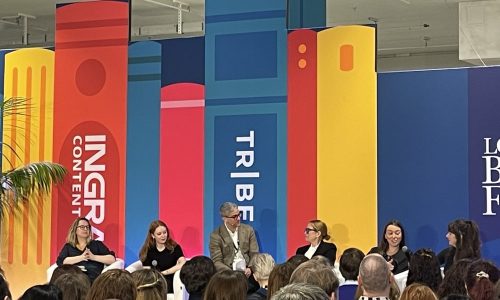
Dan Conway – the head of the UK’s Publishers Association – talks of the “feedback loop” – where adapting books for the screen can both get new people into cinemas – but also lead to the sales of more books.
Holly Tonks – from HarperCollins – says the sale of Paddington books is still 59% higher than before the Mighty Boosh director Paul King first brought the character to the big screen in 2014. Having said that, for many, Paddington was already a screen character, having been brought to TV in the 1970s and 80s.
In this sense, Paddington is one of the few literary creations to have made it separately to both the big and small screen.
One of the first considerations, when thinking about adapting a book is how “expandable” it is, Natalie Christopher from Hachette UK, told a gathering of literary industry figures at the London Book Fair. Does it better fit a TV or film adaptation? Are there any meaty roles for big name actors. What might the budget be?
One company that’s no stranger to literary adaptations – in both TV and film format – is Netflix. Both as a production house and a streaming service, Netflix has taken best-sellers and turned them into film award winners, with the recent Frankenstein still waiting to find out how it fares at this weekend’s Oscar ceremony.
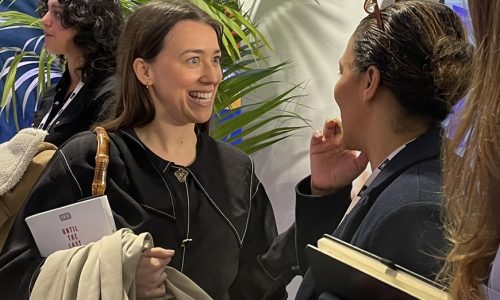
Meanwhile, on the small screen, the streaming giant has a deal which sees the crime novels of Harlan Coben turned into eight-part mini-series at the rate of one a year, with varying degrees of success, the most recent including Run Away, Missing You and Fool Me Once. The manager of UK scripted series for Netflix, Alice Pearse, has worked on 5 of them and is currently working on a new adaptation of Pride and Prejudice. She stressed that there was no “one size fits all” way of looking at adaptations, but described what she called a “beautiful dance” between the way the writers work with the rest of the team – in the case of the Harlan Coben adaptations, with the author himself acting as a bridge between them. She says that over time, some authors like to get more involved in their shows, while others prefer to hand over their books and forget about them.
Tonks says writers shouldn’t fear just handing over their books. “Film has to be seen as separate to the book – a separate entity,” she explains, saying authors can “relinquish creativity to the film makers, who know that medium best.” She notes that this is a good way to reach audiences who might not otherwise have found you.
Netflix is also about to launch a series based on the successful crime series of Detective Hole books by Jo Nesbø, who’s no stranger to seeing his works on screen. One of his earlier novels, Headhunters became one of the strongest films of 2011, while The Snowman, featuring Michael Fassbender as the aforementioned Harry Hole, was less successful.
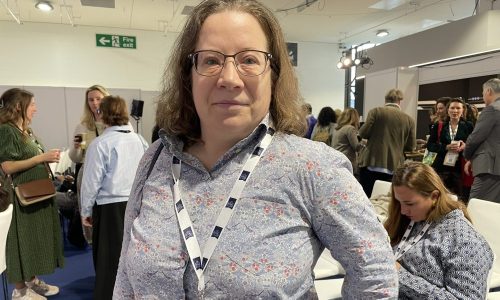
But while the line-up of speakers put together for the panel came largely from publishers, producers and streamers, there was another vital part of the process sitting in the audience. Literary agent Kate Nash says it’s often the agent, rather than the publisher, selling – or optioning – rights to an author’s work to producers. She’s recently sold her client Sean Watkin’s novel Black Water Rising to a producer.
Christopher says that at the point that she’s sharing material with production companies, it’s often very close to when the book is acquired and the rights are sometimes sold before the book is even published. “Everyone is hungry for good stories,” she says, noting that success for both books and films or TV can depend on each other, so it’s often worth publishers and producers working together to develop projects. “The more people who love it from the get go,” she says, “The more chance it will come to fruition.”