| Worth seeing: | as a nostalgic journey back to 1960 Paris, to join some of cinema's most influential figures at the start of their careers |
| Director: | Richard Linklater |
| Featuring: | Aubry Dullin, Guillaume Marbeck, Zoey Deutch, Adrien Rouyard, Antoine Besso, Benjamin Cleryn, Bruno Dreyfürst, Côme Thieulin, Jade Phan-Gia, Jodie Ruth-Forest, Jonas Marmy, Laurent Mothe, Léa Luce Busato, Matthieu Penchinat, Paolo Luka-Noé, Pauline Belle, Tom Novembre |
| Length: | 106 minutes |
| Certificate: | 12A |
| Country: | France, US |
| Released: | 30th January 2026 |
WHAT’S IT ABOUT?
By the late 1950s, fed up with the Hollywood movies being force-fed to the French public, a group of film critics, from the magazine Cahiers du Cinema, decide to start making films themselves.
Not to be outdone by Francois Truffaut (Adrien Rouyard), whose debut feature has just won a prize at Cannes, his friend and fellow critic Jean Luc Goddard (Guillaume Marbeck) is determined to get his own directing career off the ground.
The money men agree to give him a chance – but only if he directs a screenplay by Truffaut, called A Bout De Souffle – or Breathless.
Nouvelle Vague follows the trials and tribulations of a low-budget film-maker, punching above his weight, as he tries to get noticed by the industry – and helps to launch one of the most influential movements in 20th Century cinema.
WHAT’S IT LIKE?
Richard Linklater’s love for the French New Wave of cinema is evident in every frame of his latest biopic, released just days after Ethan Hawke picked up an Oscar nomination for his portrayal of the American song-writer Lorenz Hart in Linklater’s Blue Moon. And viewers will probably also need to have a bit of love for the genre before they start watching this to get the most out of it.
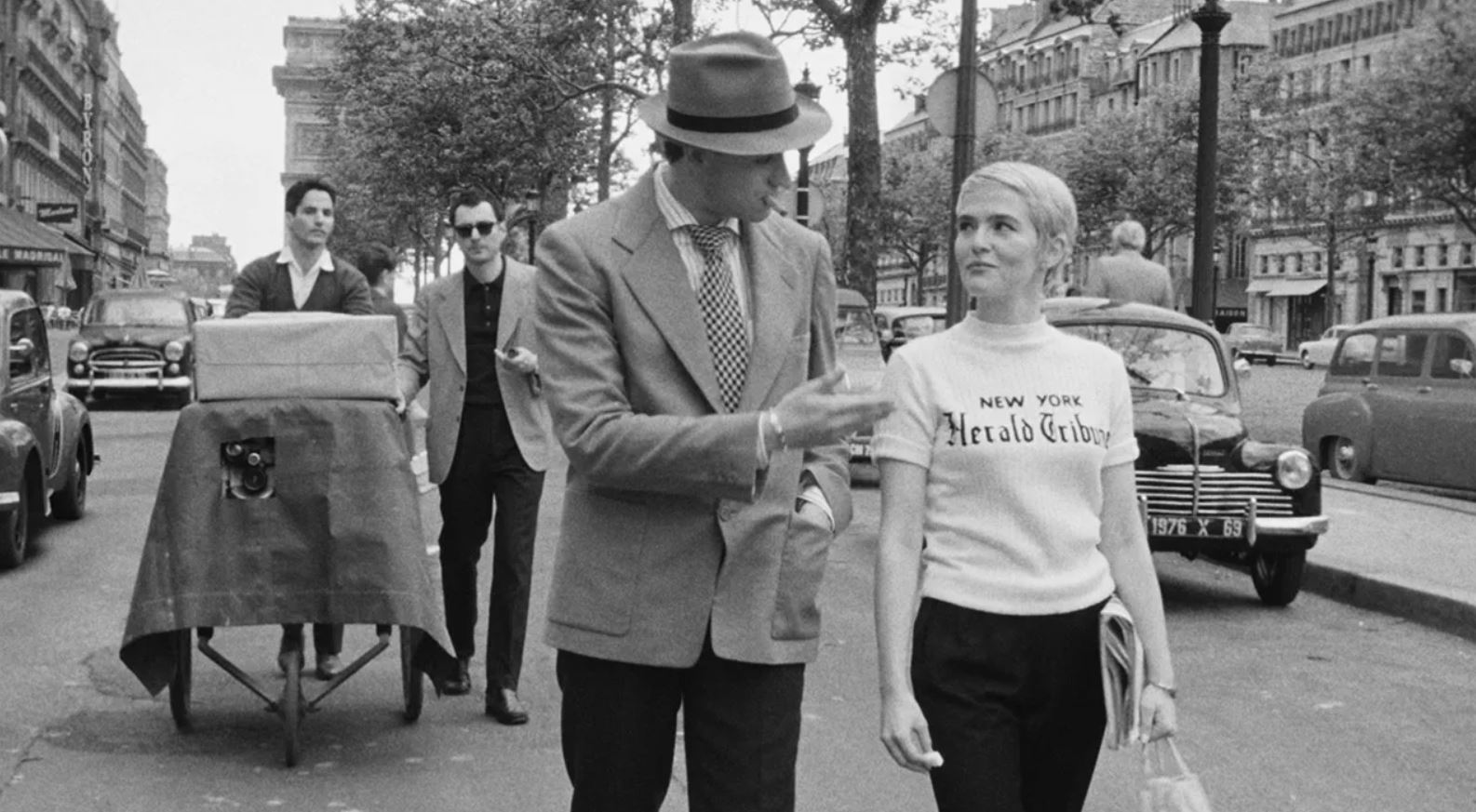
Nouvelle Vague is both biopic and pastiche – filmed in black and white and in French, it feels almost as if you are watching a French New Wave film – at times, you’ll have to kick yourself to remind yourself you’re not watching Breathless itself.
Guillaume Marbeck perfectly encapsulates the arrogance, vulnerability and creativity of one of cinema’s great mavericks and Aubry Dullin slips comfortably into the role of one of French cinema’s biggest stars of the time, while Zoey Deutch effortlessly captures the Jean Seberg’s free spirit.
The dialogue is authentically peppered with some of Godard’s maxims of film-making – such as the suggestion that the best way to criticise film is to make a film and “all you need is a girl and a gun” – and you certainly get a sense that the vibrancy of the central character was reflected in his unconventional directing style.
Watching Nouvelle Vague, it almost seems remarkable that A Bout de Souffle ever even got finished but despite his idiosyncrasies, Godard – and his fellow critics-turned-directors, including Truffaut, Rohmer and Chabrol – shook French cinema to its core and laid the ground-work for a genre that’s still lauded in Europe and beyond, some 6 decades later.
Nouvelle Vague is Linklater’s love letter not just to Godard or Breathless but to the whole film movement – and it’s fans of that movement who will enjoy it the most.